
news and events - HYDRA launch
19th October 2007
The University of Reading recently hosted the launch of a major research initiative, HYDRA, linking water environment science research groups at the universities of Reading, Oxford, Imperial College London, Queen Mary College London and UCL, the British Geological Survey and the Centre for Ecology & Hydrology.
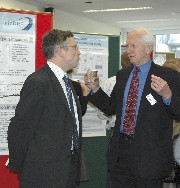
There were 38 posters presented on the day.
HYDRA, the HYDrosciences Research Association for strategic multi-disciplinary research in water science, policy and management, was formed in response to policy guidance from HEFCE, the Research Councils UK and the HM Government Science and Innovation Investment Framework 2004-2014 on the need for inter-institutional research to meet major research challenges with major societal impact. Its aim is to help policy makers and managers find solutions to some of the most significant environmental challenges facing society in the next few decades.
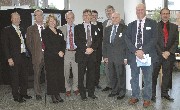
The launch event was held in the Madejski Lecture Theatre, hosted by Professor Penny Johnes from the University of Reading, Executive Director of HYDRA. Meeting attendees included the Director of BGS Dr John Luddon, the recently appointed NERC Theme Leaders Dr John Rees and Professor Rowan Sutton, and senior representatives from NERC as well as representatives from SEEDA, Defra, the Environment Agency, the Water Companies plc, British Waterways, the Thames Estuaries Partnership, Forest Research, the National Farmers Union, Astra Zeneca plc, WaterWise, the National Trust, RSPB, private water research consultancies, and local water environment action groups.
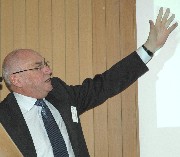
The meeting was opened by Professor Denis Peach, Chief Scientist for the British Geological Survey. Attendees then heard presentations from HYDRA members on the key themes to be addressed by the partnership, including
- Climate change interactions with aquatic environments
- Improved forecasting of hydrological responses to extreme (weather) events
- Defining, restoring and defending ecological health and sustainability
- Planning for water resource management, particularly in resource-stressed areas such as south-east England
- Deriving new approaches to identify existing and emerging problems associated with chemical discharges to aquatic environments.
The formal presentations ended with a panel discussion on integrating hydrosciences research to provide the best in evidence based policy for environmental management, and the best ways to build an integrative and inclusive research environment involving both scientists and stakeholders. Panel members included Dr Robert Willows from the Environment Agency Centre for Risk and Forecasting, Mr Brian Connorton, Raw and Wastewater Manager for Thames Water and Dr Robert Cunningham, Head of Water Policy at the RSPB. Professor Alan Jenkins, Director of the CEH Water Programme closed the formal presentations, and the meeting ended with a drinks and poster reception.
Further details on the aims, vision and the research challenges we face for the water environment are given on the HYDRA website (www.hydra.uk.net).


