
aquatic ecology
Aquatic ecosystems, particularly in crowded areas of the globe, are under particular threat from increasing demands for water, space and food and from climate change. We seek to protect them by placing their 'good ecological status' at the centre of our environmental legislation. It is the task of aquatic ecologists to:
- say how we would objectively recognise 'good ecological status' as required under the EU Water Framework Directive
- observe, detect and diagnose unwelcome changes in aquatic ecosystems
- advise on how we might restore and improve those which have deteriorated.
To do any of these things we need to understand aquatic ecosystems and their behaviour in a fundamental way. In the face of such challenges it is the main strength of HYDRA that it marries all these other disciplines and approaches with internationally outstanding expertise in aquatic ecology.
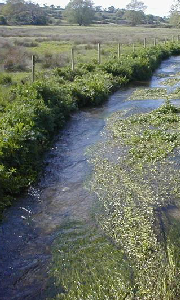
HYDRA ecologists study a wide variety of aquatic systems, including rivers, streams, groundwater and floodplains, lakes, ponds and artificial water bodies, estuaries, salt marshes and coastal seas. The approaches range from laboratory and field experiments, to field sampling and analysis, to modelling and prediction. Our research aims to characterise ecological communities, and identify energy flow and nutrient cycling through ecosystems. We also do fundamental work analysing complex ecological networks, and a very wide variety of strategic and applied research linking up with scientists from the other HYDRA subdisciplines.
HYDRA ecologists work in some of the best equipped laboratories anywhere in the world, and have access to the full range of conventional and novel techniques currently being applied to aquatic ecosystems. For information on staff with specific expertise in this field see the directory of expertise or contact the Champion for this discipline Professor Alan Hildrew.
Back to expertise home page.


